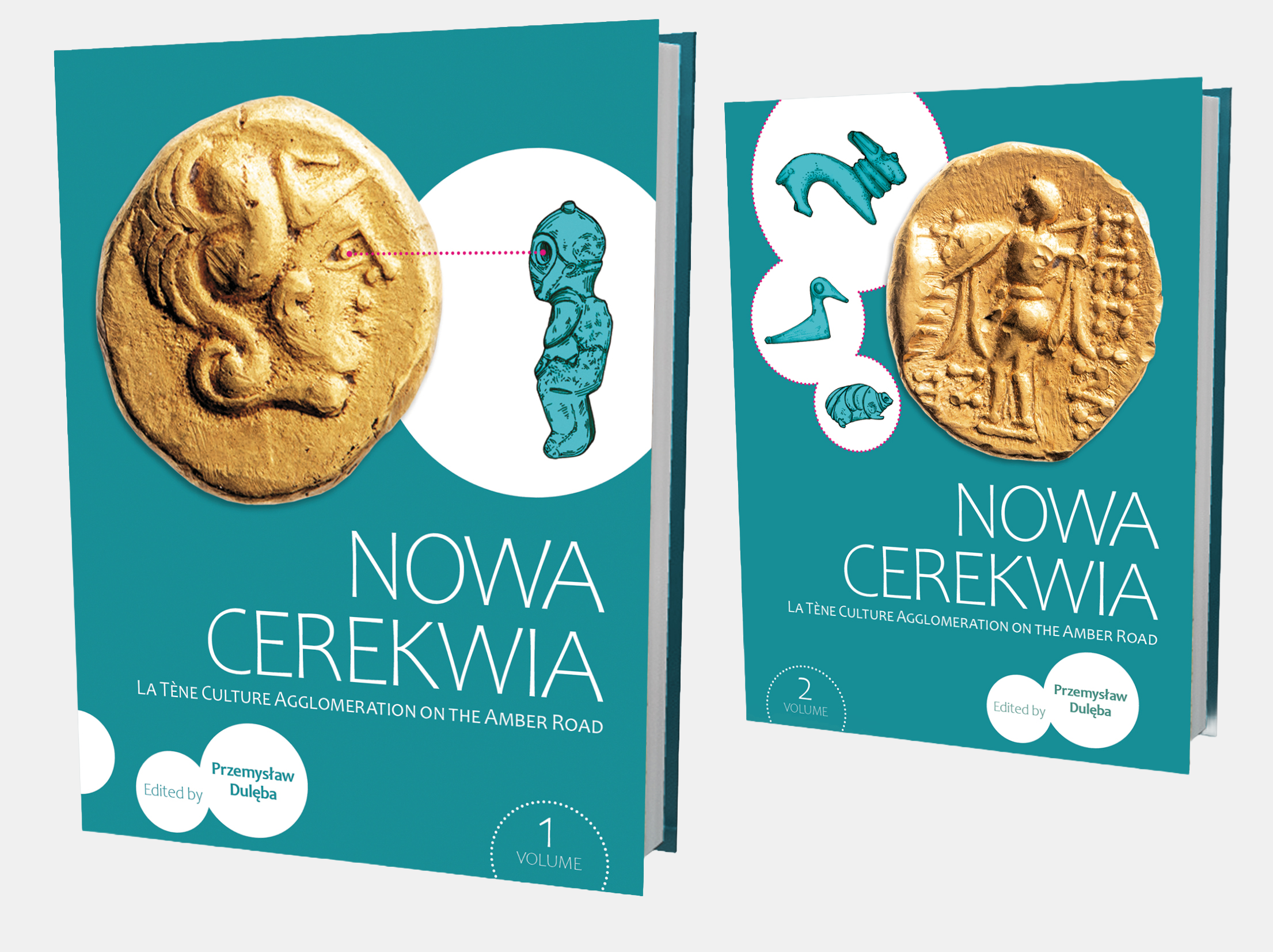
Nowa Cerekwia to monumentalne, dwutomowe opracowanie poświęcone jednemu z najważniejszych stanowisk kultury lateńskiej w Polsce i Europie Środkowej. Publikacja podsumowuje sto lat badań archeologicznych prowadzonych na wzgórzu w Nowej Cerekwi — miejscu, które z niewielkiej osady rolniczej okazało się kluczowym punktem na północnym odcinku słynnego Szlaku Bursztynowego.
Autorzy przedstawiają historię odkryć od pierwszych wykopalisk niemieckich archeologów w latach 20. XX wieku, przez powojenne badania ratownicze prowadzone przez Barbarę Czerską, aż po najnowsze projekty wykorzystujące współczesne metody prospekcji i analizy. Dzięki nim udało się zrekonstruować obraz rozległej, dynamicznej aglomeracji celtyckiej funkcjonującej w III–II wieku p.n.e., silnie powiązanej z dalekosiężną wymianą handlową i rzemiosłem.
W książce znalazły się opracowania specjalistów z Polski, Czech i Niemiec, obejmujące m.in. analizę ceramiki, zabytków metalowych, numizmatyki, technologii rzemieślniczych oraz kontekstu kulturowego i gospodarczego regionu. Tom wzbogacają liczne ilustracje, rysunki, fotografie i rekonstrukcje, przygotowane specjalnie na potrzeby tej publikacji.
To pierwsze tak kompleksowe ujęcie dziejów Nowej Cerekwi — pracy, która nie tylko porządkuje rozproszone materiały z minionego stulecia, ale także prezentuje zupełnie nowe spojrzenie na rolę Celtów w pradziejach południowej Polski.
Table of Contents
Chapter 1
- 1.1. Geographic location of the site
- 1.1.1. Hydrography
- 1.1.2. Geological structure
- 1.1.3. Soils
- 1.1.4. Climate and vegetation
- 1.1.5. Landscape in the La Tène period
- 1.2. Research history before 1945
- 1.2.1. Deutsch Neukirch – Bieskau – Altstett – Nowa Cerekwia
- 1.2.2. The story of discoveries
- 1.2.3. Catalogue of La Tène culture finds by 1945
- 1.2.4. State of the source base and research methodology
- 1.3. Research history after 1945
- 1.3.1. Post-war investigations
- 1.3.2. Source base and source criticism
Chapter 2
- 2.1. Pottery of the La Tène culture
- 2.1.1. Method of analysing ceramic evidence
- 2.1.2. Description method for ceramic vessels
- 2.1.3. Quantification
- 2.1.4. Technological groups – basic information
- 2.1.5. Characteristics of pottery production technology
- 2.1.6. Vessel morphology
- 2.1.7. Analysis of vessel types
- 2.1.8. Vessel decoration
- 2.2. General characteristics of the pottery workshop
- 2.2.1. Vessel fragmentation
- 2.2.2. Wheel-turned vs hand-built pottery
- 2.2.3. Technological groups – assemblage structure
- 2.2.4. Vessel forms
- 2.2.5. Frequency of decoration
- 2.2.6. Vessel repair
- 2.3. Ornaments and dress accessories
- 2.3.1. Fibulae
- 2.3.2. Bracelets and armlets
- 2.3.3. Anklets
- 2.3.4. Finger-ring
- 2.3.5. Necklace
- 2.3.6. Chain belts
- 2.3.7. Glass ornaments
- 2.3.8. Sapropelite and related ornaments
- 2.4. Figurines
- 2.5. Tools and objects of daily use
- 2.5.1. Agricultural tools
- 2.5.2. Metalworking tools
- 2.5.3. Woodworking tools
- 2.5.4. Leatherworking tools
- 2.5.5. Toilet implements
- 2.5.6. Items of daily use
- 2.5.7. Stone objects
- 2.5.8. Clay artefacts
- 2.6. Weapons and military equipment
- 2.7. The non-La Tène finds
- 2.7.1. Background
- 2.7.2. Find categories
- 2.7.3. Pottery
- 2.7.4. Dress and personal accessories
- 2.7.5. Household, interplay and display
Chapter 3
- 3.1. Coins, gold and silver
- 3.1.1. Basic characteristics of the coin assemblage
- 3.1.2. Nike type staters
- 3.1.3. Celtic coinage in the Amber Road corridor
- 3.1.4. Numismatic analysis
- 3.1.5. Summary of numismatic findings
- 3.1.6. Catalogue of coins, gold and silver bullion
- 3.2. X-ray fluorescence analysis of coins and ingots
- 3.2.1. Introduction
- 3.2.2. Gold coins and fragments
- 3.2.3. Hack gold
- 3.2.4. Suberate coins
- 3.2.5. Silver coins
- 3.2.6. Greek copper-based coins
- 3.2.7. Conclusions
Chapter 4
- 4.1. Animal remains
- 4.1.1. Methods
- 4.1.2. Results
- 4.2. Anthracology
- 4.3. Iron metallurgy
- 4.4. Graphite-tempered pottery: archaeometric studies
- 4.4.1. Introduction
- 4.4.2. Material
- 4.4.3. Microscopic studies
- 4.4.4. Raman studies
- 4.4.5. Summary
Chapter 5
- 5.1. Buildings and layout of the settlement
- 5.1.1. Pit houses
- 5.1.2. Pits
- 5.1.3. Hearths
- 5.1.4. Pottery kiln
- 5.1.5. Post structures
- 5.1.6. Building arrangement
- 5.1.7. Settlement size – settlement type
- 5.2. Settlement network in the micro-region
- 5.3. Cremation grave with quadrilateral ditch
- 5.3.1. Grave furnishings and dating
- 5.3.2. Ditched features in Central Europe
- 5.3.3. Function of the feature
- 5.4. Bioarchaeological study of the cremation grave
- 5.4.1. Introduction
- 5.4.2. Methods
- 5.4.3. Results
- 5.4.4. Discussion and summary
- 5.5. Economic issues
- 5.5.1. Animal husbandry and hunting
- 5.5.2. Agriculture
- 5.5.3. Crafts
- 5.6. Trade
- 5.6.1. Transport
- 5.6.2. The Amber Road
- 5.6.3. Coins and bullion
- 5.6.4. Raw materials
- 5.6.5. Finished items
Chapter 6
- 6.1. Dating the settlement’s existence
- 6.2. Regional context – La Tène culture in Silesia
- 6.2.1. Genesis
- 6.2.2. Characteristics
- 6.2.3. Contacts with other enclaves
- 6.3. Supra-regional context
- 6.3.1. Settlement network
- 6.3.2. Cimbrian migration and Celtic decline
- List of finds
- Bibliography








Opinie
Na razie nie ma opinii o produkcie.